
Staying Strong at 80
My Adaptive Exercise Regimen for the Bootstrap Strategy

[Previous posts in this series:
1. From Lazarus Long to Lord of Light
2. The Bootstrap Strategy
3. My Daily Supplement Stack
4. Big Pharma Saved My Life So I Can Extend It]
In the earlier posts I described the literary spark that set me on this path, the high-level Bootstrap Strategy, my supplement stack, and the prescription medications that have kept me alive long enough to pursue real life extension. This post covers the physical training side — how I work out to stay as capable as possible while actively combating the debilities that come with advancing age.
At 80, with COPD, familial hypercholesterolemia, controlled high blood pressure, widespread osteoarthritis, two damaged lower back disks, and a Heberden’s Node on my right thumb that limits grip, the goal isn’t to set powerlifting records. It’s to maintain (and where possible improve) strength, mobility, respiratory function, and daily capability so I can keep pulling on those bootstraps until the next wave of breakthroughs arrives.
This is not medical advice. I work with my doctors, listen to my body, and adjust constantly. What works for me may need modification for you.
Core Philosophy
I train for functional longevity: enough strength to handle daily life and emergencies, enough mobility to avoid injury, enough cardiovascular capacity to support everything else, and enough consistency to compound benefits over decades. I keep sessions short (30–45 minutes), prioritize recovery, and use supportive gear (belt, gloves, straps, knee brace) without ego.
Strength training is especially valuable for older adults. Research shows it reduces mortality risk, preserves muscle and bone, improves balance, and helps manage chronic conditions like arthritis, high blood pressure, and COPD.
My Typical Weekly Schedule (2026)
Monday: Heavy Pull & Push Focus
Rack pulls: 2x5x165# (13” from floor, belt/gloves/straps) — safer on my back than conventional deadlifts while still building posterior chain strength.
Bench press: 3x5x95#
Dead bugs: 3x8 per side (core stability for back protection)
Warm-up: Exercise bike 10 min
Hand/back stretches + crunches (50 reps)
Tuesday: Light Pull & Cardio
Chins: 3 reps (gloves for thumb)
Light cycling: 10 min
Morning stretches + crunches (50 reps)
Wednesday: Lower Body & Push
Squats: 3x5x100# (belt, knee brace if needed)
Bench press: 3x5x95#
Warm-up: Exercise bike 6–10 min
Hand/back stretches + crunches (50 reps)
Thursday: Grip & Light Cardio
Grip trainer: 2x10 at ~100#
Light cycling: 10 min
Morning stretches + crunches (50 reps)
Friday: Core & Mobility
Planks: 3x15–20 seconds
Warm-up: Exercise bike 6–10 min
Hand/back stretches + crunches (50 reps)
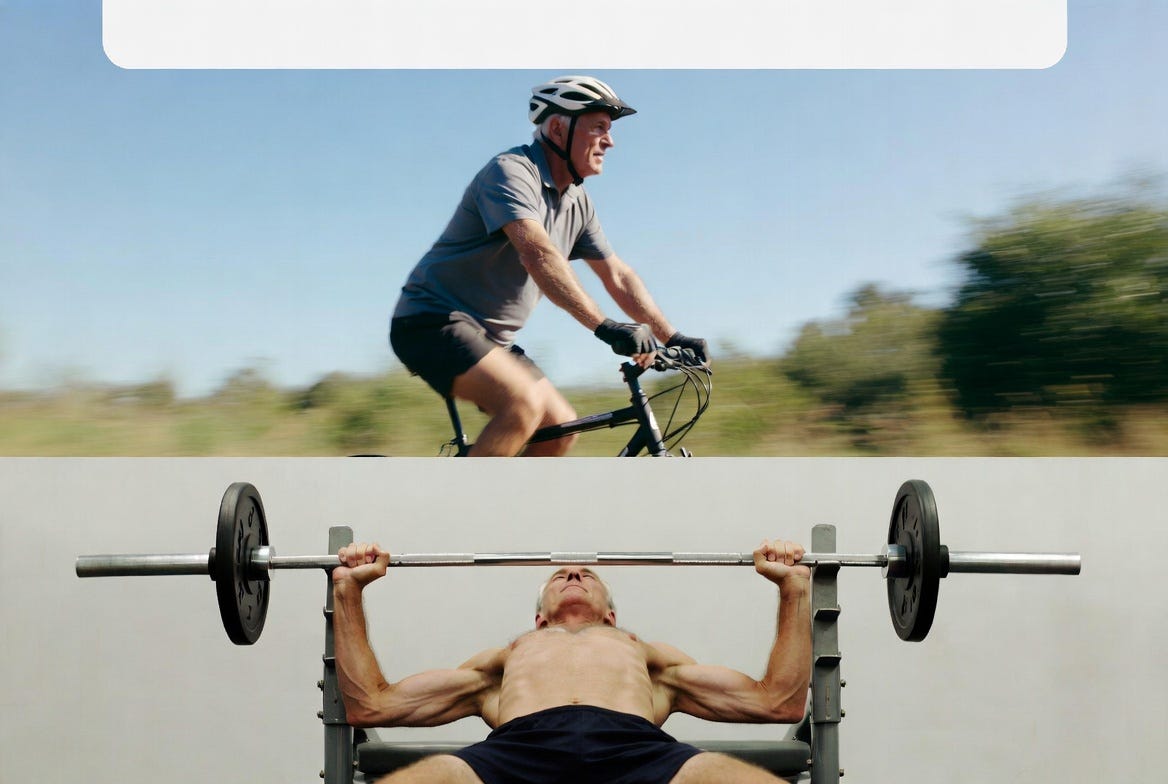
Weekend: Active recovery — longer bike rides (10–20 miles when weather allows), walking, or complete rest. I train 4–5 days per week with built-in flexibility.
Adaptations for My Specific Conditions
COPD: Short sessions with bike warm-ups and albuterol pre-exercise keep breathing manageable. I avoid prolonged high-intensity work and focus on steady-state cycling for lung capacity.
Back disks: Rack pulls (elevated start) reduce shear stress compared to floor deadlifts. Dead bugs and planks build core stability without loading the spine excessively.
Osteoarthritis & Heberden’s Node: Padded gloves, straps for pulls, and careful grip work help. I use lighter weights with strict form and prioritize mobility stretches.
High BP & Cholesterol: Consistent training helps keep both under better control alongside my medications.
I monitor how I feel daily and deload or modify as needed. Progress is measured in capability — being able to ride, lift groceries, or type comfortably — not just numbers on the bar.
Why This Works for Me
This regimen has helped me maintain (and in some areas improve) strength and function at 80. I can still do 15–20 mile bike rides, handle daily tasks, and feel physiologically closer to 60 than my chronological age. Research supports this approach: strength training in older adults lowers all-cause mortality, improves function in arthritis, and helps manage COPD and cardiovascular risk.
I’m not chasing elite performance. I’m fighting to stay in the game long enough for the real longevity breakthroughs — the moment when my ability to grow physiologically younger outpaces the rate at which I age.
In the next post I’ll cover how I track results with labs, biomarkers, and subjective measures.
Until then: stay consistent, stay adaptive, and keep pulling on those bootstraps.